Saddle Fitting Guide: At-Home Tips
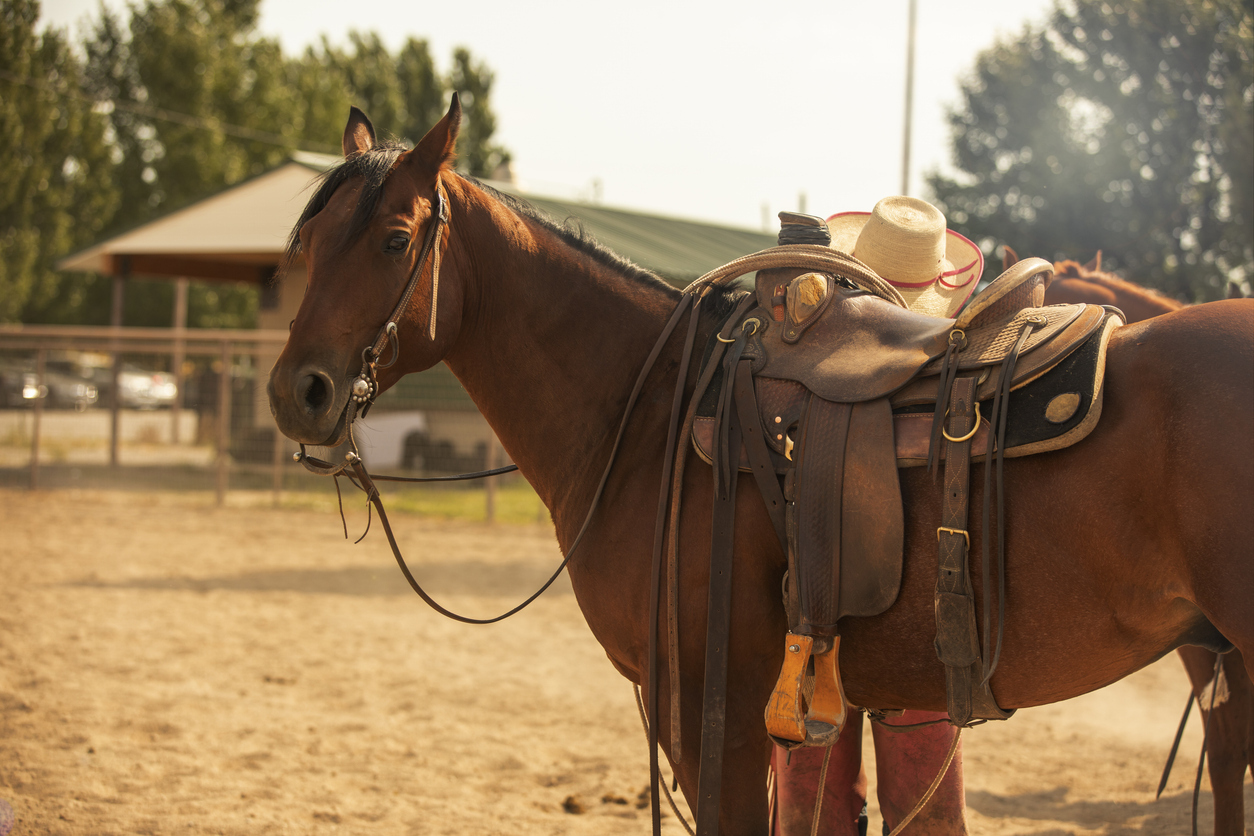
With a few simple techniques and some basic knowledge, you can evaluate saddle fit right at home before making a purchase. There's an old saying that a good saddle is worth its weight in gold, and any rider who's spent a long day in the wrong seat knows exactly why. A saddle that fits well keeps both horse and rider comfortable, balanced, and ready to perform. A saddle that doesn't fit? That's a recipe for sore backs, behavioral issues, and frustration all around.
The tricky part is that saddle fit involves matching the angles of the saddle tree to your horse's back, and every horse is built a little differently. This guide will walk you through how to assess saddle fit at home using the same techniques we use here at Saddle Up Colorado, so you can shop with confidence and know what questions to ask when you're ready to buy.
Why Saddle Fit Matters
Before we get into the how-to, let's talk about why it matters. A poorly fitting saddle can cause real problems for your horse over time, including muscle atrophy, back soreness, lameness, and behavioral issues. We've seen horses completely turn around once they got into the right size saddle. Maybe not every problem traces back to saddle fit, but it's one of the first things worth checking when something feels off.
When a western saddle fits properly, you'll notice the difference immediately. Your horse moves more freely, you feel more secure in the seat, and those long trail rides become a whole lot more enjoyable.
If you’re more of a visual learner, feel free to check out the video below and follow along as you watch:
Before You Start: Setting Up for Success
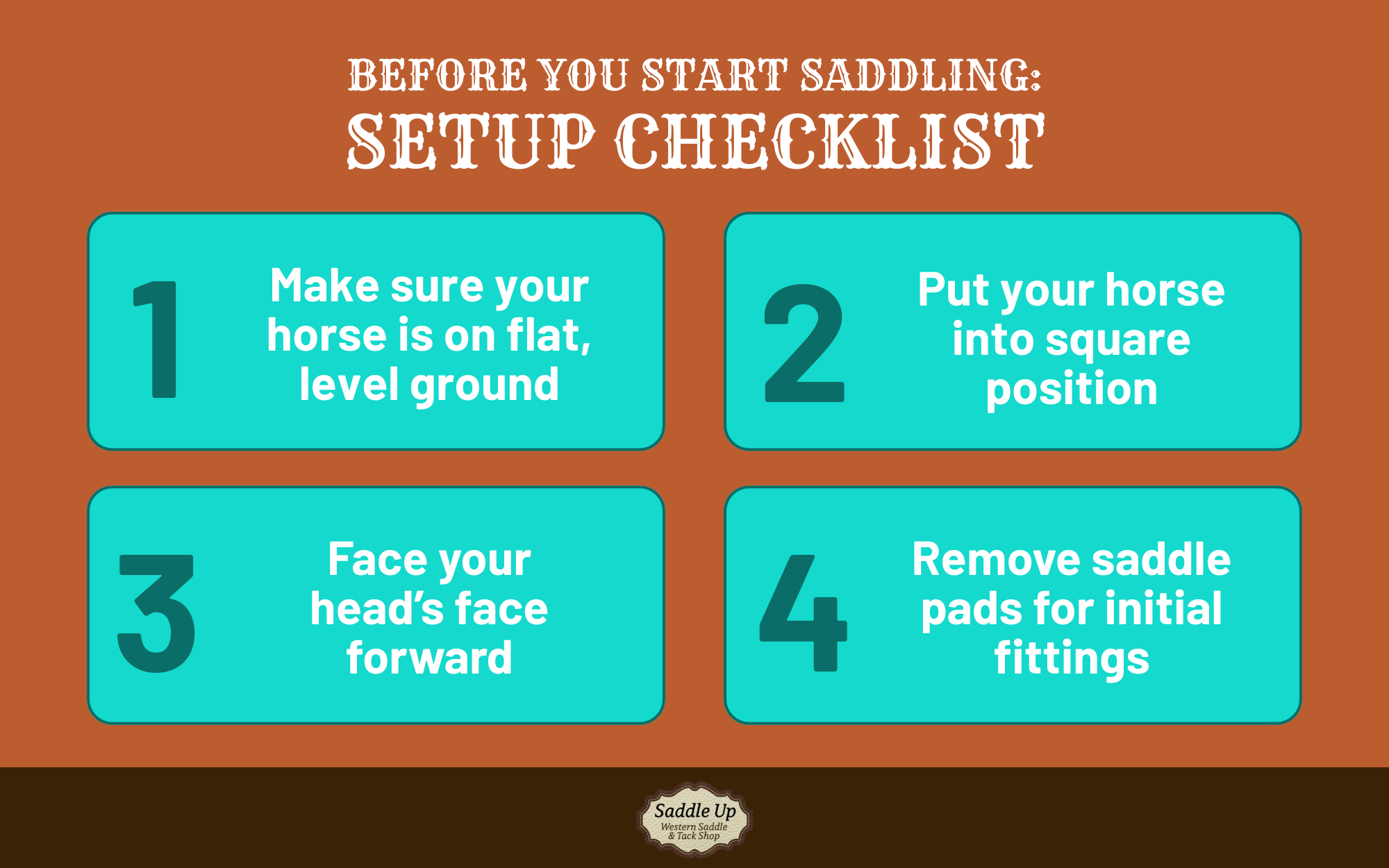
Getting an accurate read on saddle fit starts before you ever touch the saddle. These details matter more than most people realize.
Flat, level ground: Always check saddle fit with your horse standing on flat, level ground. Uneven footing changes how the saddle sits and can give you a false read.
Horse standing square: Your horse needs to be standing square with weight distributed evenly on all four legs. If your horse is standing cockeyed or resting a hip, it can completely change how the saddle feels. A saddle might fit perfectly fine, but if the horse is standing offset, you'll think there's a problem.
Head straight forward: Keep your horse's head facing forward, not down grazing or turning to look around. Head position affects the shape of the back and withers.
Take the time to get these things right. It makes all the difference in getting an accurate feel.
What You'll Need
The good news is that checking saddle fit at home doesn't require much equipment. Here's what to have on hand:
- Your saddle (no pad for the initial fitting)
- A helper to hold your horse steady (optional but helpful)
- Your hands and attention to detail
That's really it – Saddle fit is all about feel, and your hands are the best tools you have. Some guides recommend a measuring tape for taking wither tracings, but saddle fit does not stop at the withers. The method we use here at Saddle Up focuses on feeling the contact between the bare tree and the full length of the saddle bars on your horse's back.
Step 1: Position the Saddle Correctly
Proper saddle placement is the starting point for everything else. Using your hand in a cupping motion, find the back edge of your horse's scapula (shoulder blade). This back edge of the scapula serves as your reference point. The front edge of your saddle's front concho should line up with that spot.
This positioning allows your horse's shoulder to move freely underneath the saddle without interference. If the saddle sits too far forward, it restricts shoulder movement. Too far back, and you'll have pressure in the wrong places.
Step 2: Check Fit Without a Saddle Pad
Here's something that surprises a lot of riders: we always check saddle fit without a saddle pad first. The saddle tree is what actually fits your horse's back. Everything else, including the skirts and leather, is cosmetic and doesn't affect the fit.
Our goal is to find a saddle that fits your horse's back on its own. Once you have that correct fit, you simply add a regular saddle pad, which won't change anything. A standard pad just provides cushioning and protection.
The only time you need a specialty pad (like a shim pad or one designed to fill in gaps) is if your horse has a conformational issue that needs correction. If your saddle already fits well without a pad, adding shims or specialty padding can actually throw off that good fit.
Step 3: Feel Along the Tree Bars
This is where the real work happens, and it's all about feel. Pictures don't do saddle fit justice. Sweat marks don't tell the whole story either. The most accurate way to check saddle fit is by feeling with your hands.
Get your hand in the right position. A common mistake is feeling down low along the bottom of the skirts. That's not where the fit matters. You need to get your hand high up, about 2-3” below the topline, where the actual tree bar contacts the horse's back. When checking fit, your hand should be way up there along the physical tree bar, not skimming along the cosmetic leather.
What you're feeling for: You want smooth, consistent contact all the way through. Your hand should slide easily from front to back with no catches, no tight spots, no pinching, and no big gaps. The saddle should be touching your horse's back, but you should be able to slide your hand right through with that same even pressure the whole way.
Start at the shoulder area and slide your hand all the way through to the back. You're looking for that nice, smooth transition. It's okay to lose a tiny bit of contact in the very center, but overall you want consistent pressure with a smooth slide out the back near the loin.
Step 4: Pay Extra Attention to the Shoulder Area
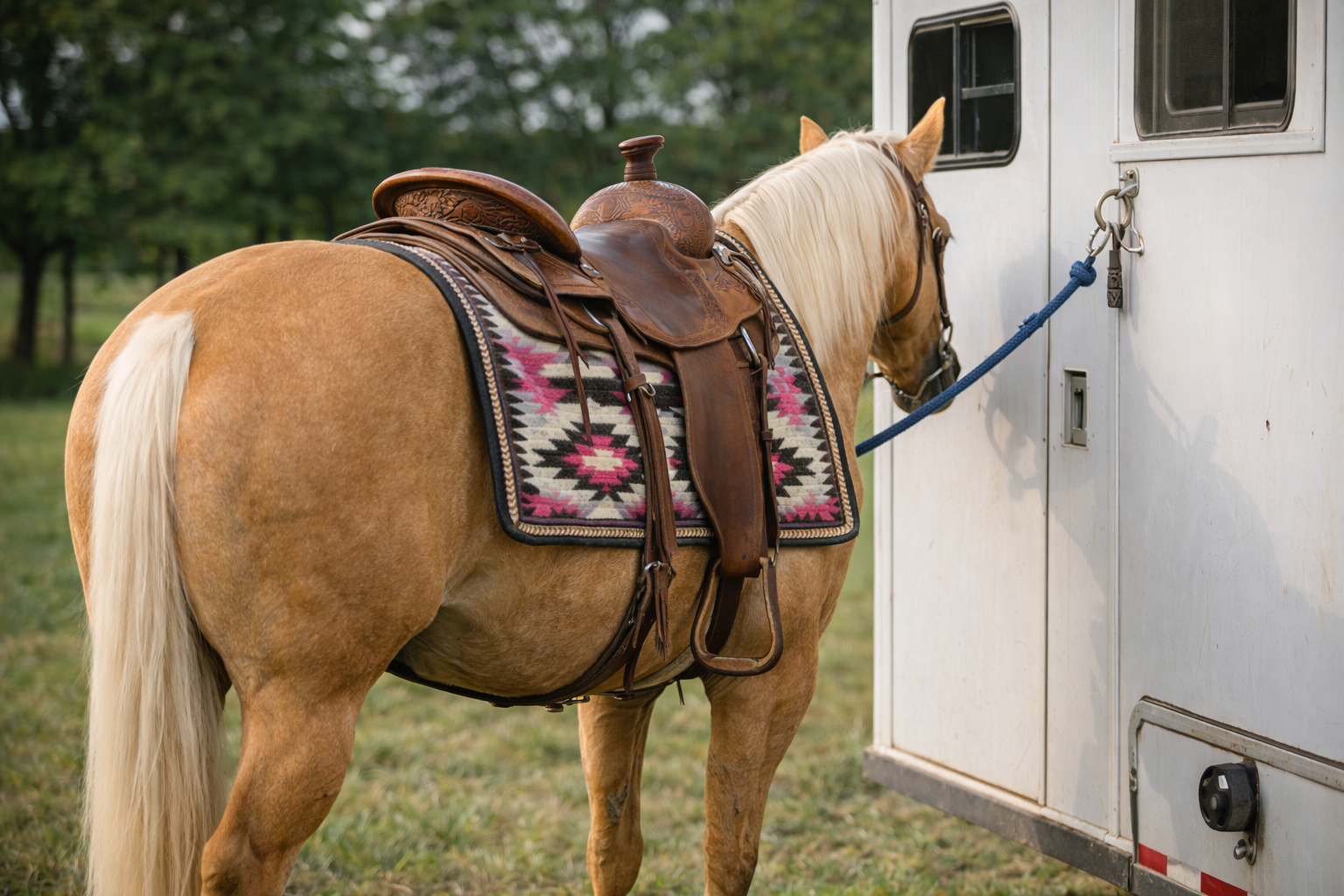
The shoulder area, particularly where the concho screw sits, is the number one spot where we find saddles don't fit horses. This is where the angles of the saddle tree need to match up with the angles of your horse's back, and tree size plays a major role in getting this right.
Get your hand high up in this area and slide all the way through. There should be no catches, no pinching, and no flaring where the saddle loses contact. Just that same smooth, even feel you're looking for everywhere else.
If you feel tightness, pinching, or gapping in this area, that's a red flag worth paying attention to. Keep in mind that tree size and angle vary between manufacturers, so a saddle that doesn't work from one brand might fit perfectly from another.
Step 5: Check Wither Clearance
Wither clearance is one of those topics where you'll hear different opinions, and personal preference does come into play. Some people say you need a full fist of clearance between the saddle and the withers. We don't agree with that.
If you can fit a whole fist under your saddle at the withers, that often means the angle of the saddle is too narrow for your horse. The saddle can't come down and hug your horse's back and shoulders properly, which leads to rolling issues and soreness.
On the other hand, if your saddle is sitting right down on the wither with no clearance at all, that usually means the saddle is too wide.
What we look for is a couple of fingers of clearance. When you add a saddle pad with a wither cutout, it will lift the saddle slightly and give you even more room. But you don't need a fist. A couple of fingers with no pad and the saddle on your horse's back is adequate.
Step 6: The Stirrup Pressure Test
Here's a quick test you can do at home: With the saddle sitting on your horse's back (not cinched down), put your hand in the stirrup and press down with enough weight to simulate a rider starting to mount, ~20-30 pounds of pressure. A well-fitting saddle should stay put and not budge. If the saddle rolls to one side with even slight pressure, that's a sign the fit isn't right. It might be too wide or too narrow for your horse's back.
Keep in mind that since the saddle isn't cinched, you could probably force it to move if you tried hard enough. But a good-fitting saddle will feel stable and secure even without being attached.
This test is especially useful for horses with mutton withers (horses that are so round and full through the back that their wither is barely visible). These horses can be tricky to fit because there's less prominent shape for the saddle to grab onto.
Step 7: Consider Skirt Length
This falls more on the cosmetic side of saddle fitting, but it's worth mentioning. If you have a shorter-backed horse, pay attention to how the saddle skirt relates to the hip.
A square skirt or longer skirt on a short-backed horse can sometimes jam into the hip during movement. Watch for signs of soreness, rub marks, or your horse showing discomfort in that area. If the skirt is impeding movement or causing issues, you may need to look for a saddle with a shorter or rounded skirt.
That said, plenty of horses in disciplines like reining and cutting use saddles that hang over the hip area with no problems. It's something to be aware of and watch for, not an automatic deal-breaker.
Signs of an Ill-Fitting Saddle
Once you've done your initial fitting, it's important to monitor how things go over time. Learning to spot the warning signs can save you and your horse a lot of trouble. Watch for these red flags:
- Behavioral issues under saddle (resistance, attitude changes, reluctance to move forward or even backing up)
- The horse struggling to move into different gates
- Short strides or choppy movement
- Lameness or being "off" that you can't pin down
- Muscle atrophy along the back
- Back soreness or sensitivity when grooming
- White hairs or sore spots developing on the back or near the withers
- The saddle rolling or shifting during use
- Dry spots in sweat patterns after riding (though feel is more reliable than sweat marks)
- Rub marks or soreness near the hip (possible skirt length issue)

When to Ask a Professional for Help
While these at-home tips give you a solid starting point, some situations call for expert guidance. Consider a professional saddle fitting if:
- You're buying a new saddle and want to get it right the first time
- Your horse has conformational challenges (mutton withers, very short back, asymmetry)
- You're experiencing ongoing fit problems you can't solve on your own
- Your horse has changed shape due to age, conditioning, or weight changes
- You want a second opinion from experienced eyes and hands
Find Your Perfect Fit at Saddle Up Colorado
At Saddle Up Colorado, we carry over 300 new and used western saddles in a wide range of styles, tree sizes, and price points. From barrel saddles to trail saddles to all-around work saddles, we stock trusted brands like Circle Y, McCall and many others. Our experienced team knows saddle fit inside and out, and we're always happy to help you find the right saddle for your horse and your riding style.
Stop by our shop in Gilcrest, Colorado, give us a call, or browse our selection online. We offer free shipping on orders over $99, and our saddle fitting services are here whenever you need them.
Leave a Comment