Western vs. English Saddles: Breaking Down the Differences
Posted by Zoey Snyder - Saddle Up on Mar 6th 2026
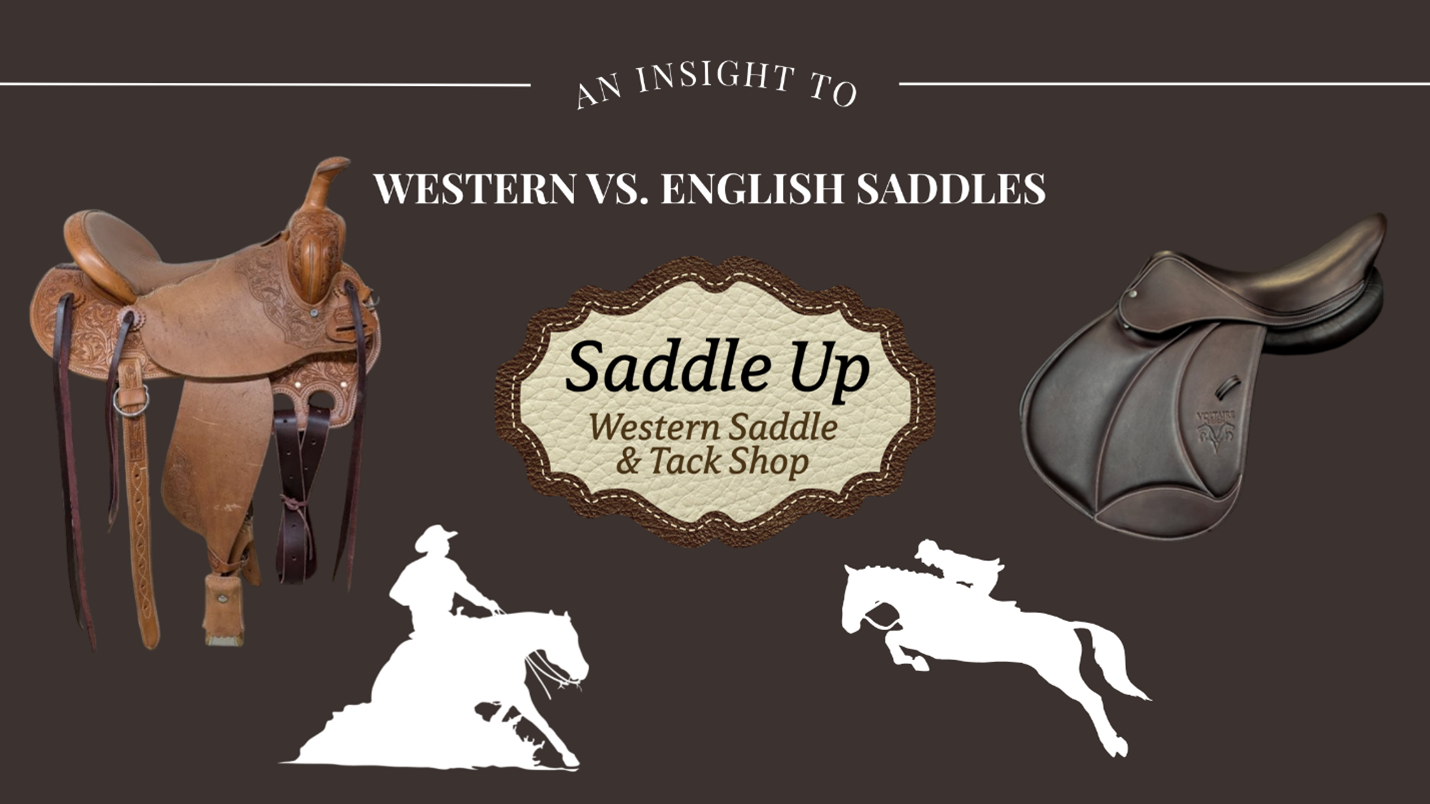
If you’ve spent any time around horses, chances are you’ve encountered both Western and English riding styles. Maybe you grew up in one discipline and later experimented with the other. Or perhaps you’re new to riding and trying to understand the difference between the two. Regardless of where you fall, one of the most defining pieces of equipment in each style is the saddle.
While Western saddles are where our knowledge and passion truly shine at Saddle Up, we appreciate and respect both sides of the equestrian world. Understanding the similarities and differences between Western and English saddles helps riders make confident, informed decisions, no matter which discipline they pursue. So, while our expertise leans Western, we’re excited to share a well-rounded look at both styles and highlight where their design, purpose, and function overlap. Here is our used English saddles on consignment and our new and used Western saddles.
Western and English saddles may share the same basic purpose (supporting horse and rider) but their design, history, and feel in the saddle are remarkably different. Each evolved to meet specific needs, shaped by geography, culture, and the demands placed on horse and rider. Let’s take a deeper look at what makes Western and English saddles unique, how they’re built, and how their differences influence the riding experience.
Western Saddles: Built for Work and Endurance
Purpose and Practical Design
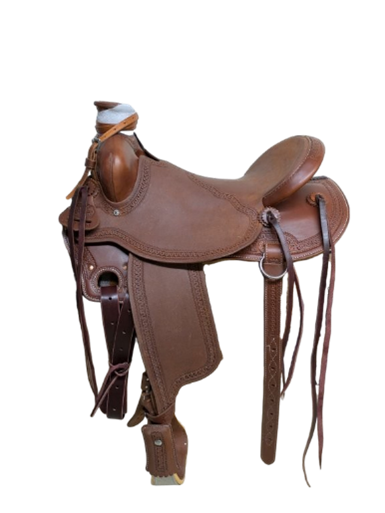
Western saddles were designed with work at the forefront. Developed for long days of ranching, they are built to provide comfort, durability, and security. Cowboys and ranch hands often spent eight to twelve hours (or more) in the saddle. The saddle needed to distribute weight evenly across the horse’s back while offering the rider stability during sudden stops, sharp turns, and rope work.
One of the primary goals of the Western saddle is weight distribution. Because it has a larger surface area underneath, it spreads the rider’s weight more broadly across the horse’s back. This is particularly helpful during long rides and while performing physically demanding tasks like roping cattle.
Security is another hallmark of the Western saddle. The deeper seat and higher cantle help keep the rider centered, especially during quick acceleration or abrupt stops.
Disciplines Associated with Western Saddles
Western saddles are used in a wide variety of disciplines, many of which stem directly from ranch work. Here are a few prominent examples:
- Ranch riding and working cow horse
- Reining
- Barrel racing
- Team roping
- Cutting
- Western pleasure
- Trail riding
- Western horsemanship
Each discipline often features subtle saddle variations. For example, a roping saddle is designed to withstand the force of a rope dallying around the horn, while a barrel racing saddle is lighter with a higher cantle and horn for added security during tight turns.
Anatomy of a Western Saddle
Understanding the structure of a Western saddle helps explain why it feels and functions so differently from its English counterpart.
The Tree
At the core of every saddle is the tree, the internal framework that determines shape and fit. Traditionally made of wood and covered in rawhide, modern trees may also be constructed from fiberglass or synthetic materials. The tree gives the saddle its rigidity and helps distribute the rider’s weight evenly.
The Horn
The horn is perhaps the most iconic feature of the Western saddle. Positioned at the front of the pommel, it was originally designed for roping cattle. Riders wrap, or “dally,” their rope around the horn to secure livestock. Even in disciplines where roping isn’t required, the horn remains a defining design element.
The Pommel (Swell)
The pommel, or swell, sits beneath the horn and is typically broader and higher than that of an English saddle. It provides additional stability and helps anchor the rider’s position.
The Seat
Western seats are generally deeper and wider, designed for comfort over long hours. The depth can vary depending on the discipline. Reining and barrel saddles may have deeper seats for added security, while roping saddles may be slightly flatter to allow freedom of movement.
The Cantle
Located at the back of the saddle, the cantle is usually higher and more pronounced in Western designs. It provides back support and helps prevent the rider from being unseated during sudden stops or powerful movements.
The Fenders and Stirrups
Western saddles use wide leather fenders instead of narrow stirrup leathers. These fenders protect the rider’s legs from the horse’s sweat and provide a stable, substantial feel. Stirrups are typically wider and heavier, often made of wood with leather wrapping, designed for durability and comfort.
The Skirt
The skirt is the large leather panel beneath the seat. It contributes to weight distribution and influences the overall length of the saddle. While beneficial for spreading weight, it can also make Western saddles heavier and longer on the horse’s back.
A Brief History of the Western Saddle
The Western saddle traces its roots back to Spanish vaqueros who brought their riding traditions to the Americas in the 16th century. As cattle ranching expanded across Mexico and the American West, saddle design evolved to meet the needs of working cowboys.
Over time, regional styles developed, influenced by terrain, livestock practices, and cultural traditions. The Western saddle became a symbol of ranch life and remains deeply tied to rodeo, cattle work, and Western competition today.
English Saddles: Precision and Close Contact
Purpose and Philosophy
In contrast to the work-driven origins of the Western saddle, the English saddle evolved from European military and foxhunting traditions. Its design emphasizes close contact, precision, and freedom of movement.
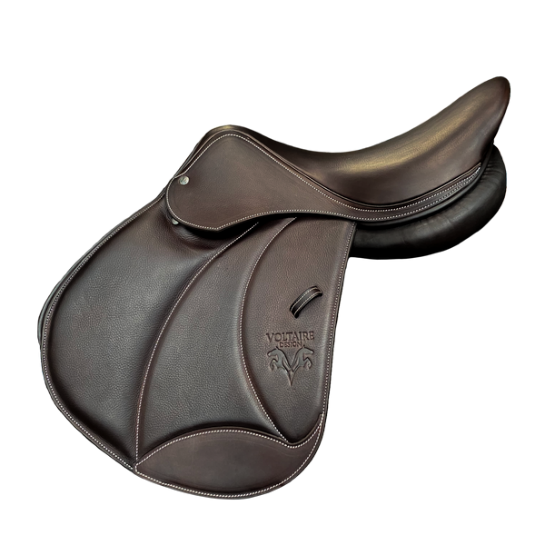
English saddles are lighter and less bulky, allowing the rider to feel more connected to the horse’s movement. This closer contact enhances communication through subtle leg aids and weight shifts. The streamlined design encourages balance and proper position without relying on a deep seat or high cantle for security.
Disciplines Associated with English Saddles
English saddles are used across a wide range of competitive and recreational disciplines, including:
- Hunter/jumper
- Show jumping
- Dressage
- Eventing
- Saddle seat
- Equitation
Each discipline features a saddle specifically tailored to its demands. A dressage saddle, for instance, has a deeper seat and longer flaps to support a long leg position, while a jumping saddle has a more forward-cut flap and flatter seat to accommodate shorter stirrups and a two-point position.
Anatomy of an English Saddle
Though simpler in appearance, English saddles are highly specialized in their construction.
The Tree
Like Western saddles, English saddles are built around a tree. Traditionally made of laminated wood reinforced with steel, modern versions may incorporate lightweight synthetic materials. The tree determines the saddle’s width, balance, and fit on the horse.
The Pommel
English pommels are lower profile and sleek. Notably, there is no horn. This absence reflects the saddle’s intended purpose: precise riding rather than roping or ranch work.
The Seat
English seats are smaller and less padded compared to Western saddles. Depth varies by discipline. Dressage saddles often have deeper seats for stability, while jumping saddles have flatter seats to allow forward movement.
The Cantle
The cantle is generally moderate in height. While it provides support, it does not envelop the rider the way a Western cantle does. Riders rely more on balance and core strength than on saddle structure for stability.
The Flaps
Instead of fenders, English saddles feature flaps—flat pieces of leather that lie between the rider’s leg and the horse. Flap shape differs by discipline. Jumping saddles have forward-cut flaps, while dressage saddles have longer, straighter flaps.
Stirrup Bars and Leathers
English stirrup leathers are narrow and adjustable. This allows riders to quickly change stirrup length depending on activity. The lighter design contributes to the overall streamlined feel.
Panels
Underneath the saddle are panels filled with wool or foam flocking. These panels cushion the horse’s back and can often be adjusted to improve fit.
A Brief History of the English Saddle
The English saddle developed from European cavalry saddles. As mounted warfare declined and foxhunting gained popularity in England, saddles became lighter and more refined.
By the 18th and 19th centuries, distinct disciplines such as dressage and jumping began to formalize. Saddle design evolved accordingly, focusing on balance, elegance, and performance. Today’s English saddles continue to innovate, incorporating advanced materials and adjustable features for optimal fit and comfort.
Key Differences Between Western and English Saddles
While both saddle types serve the same fundamental purpose, their differences are significant.
Weight
Western saddles are considerably heavier, often weighing between 25 and 50 pounds. English saddles are lighter, typically ranging from 15 to 25 pounds. The added weight of a Western saddle contributes to durability and weight distribution but can make saddling more physically demanding.
The Horn
The horn is exclusive to Western saddles and remains one of the most visible distinctions. English saddles have no horn, reflecting their sport-focused origins.
Rider Position
Western riders typically maintain a more relaxed seat with longer stirrups. English riders adjust their position depending on discipline—upright and elongated in dressage, forward and light in jumping.
Contact and Communication
English saddles are designed for close contact, allowing riders to feel subtle movements and apply precise aids. Western saddles provide more structure and security, with additional leather between rider and horse.
Structure and Components
Western saddles feature fenders, large skirts, and heavier hardware. English saddles use flaps, flocked panels, and minimal bulk.
Aesthetic and Tradition
Western saddles often showcase intricate tooling and silver accents, especially in show disciplines. English saddles maintain a sleek, understated appearance.
Choosing Between Western and English
Choosing between Western and English often depends on personal goals and riding style. Riders interested in ranch work, rodeo events, or long trail rides may gravitate toward Western saddles for their comfort and durability. Those drawn to jumping, dressage, or formal competition may prefer the precision and close contact of an English saddle.
Ultimately, neither is inherently better; they are simply designed for different purposes. Many riders enjoy experiencing both disciplines and appreciate the unique feel each saddle provides.
Final Thoughts
Western and English saddles tell a story of tradition, culture, and function. From the cattle ranges of the American West to the foxhunting fields of England, each saddle evolved to meet the needs of its riders. Understanding the anatomy, purpose, and history of each style not only deepens your appreciation for equestrian sport but also helps you make informed decisions about your own riding journey. Whether you feel most at home in a deep Western seat or a close-contact English saddle, both represent centuries of horsemanship shaped by partnership between horse and rider.