Ridin’ Wild: Your Guide to Western Bits
Posted by Lynnsy Diekman - Saddle Up on Dec 10th 2025
At a Glance: Most western bits use shanks to create leverage, giving you communication through light hand movements. Choosing the right bit comes down to your horse’s training level, your training level, the kind of riding you do, and how the two of you work together as a team.
If you’ve spent time in a western barn, you know choosing a bit is personal. Every horse has their own feel, and every rider has their own way of communicating. Understanding how western bits are built, and how they work, goes a long way toward finding the setup that keeps your horse soft, responsive, and comfortable. Here’s a break-down of what matters when picking the right bit for your horse.
What Makes a Bit ‘Western’
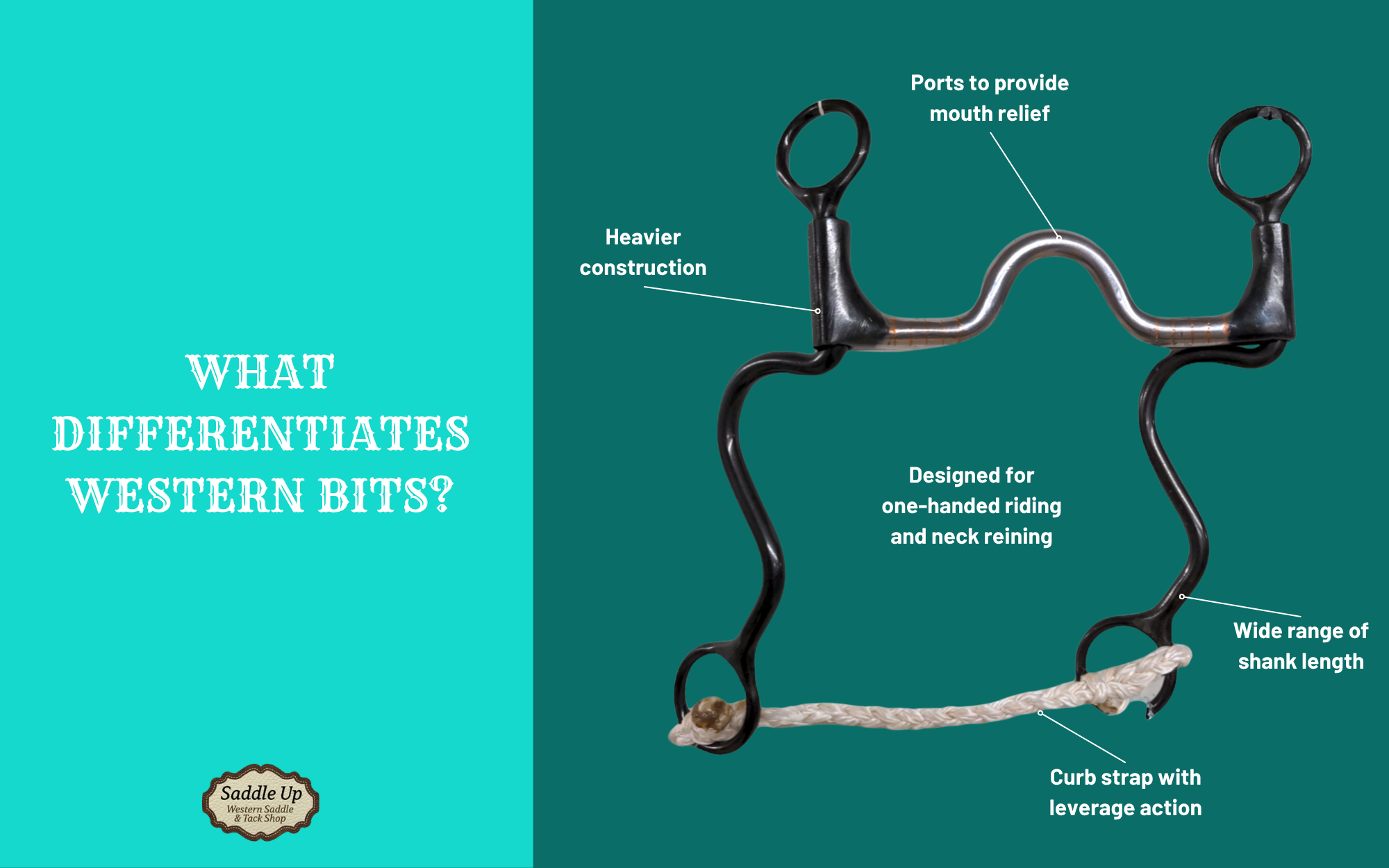
Western riding relies on subtle cues, a looser rein, and a horse that responds to your seat and body. Because of that, many western bits are built with shanks that create leverage, so a small movement in your hand translates into a clear signal for your horse. This setup supports one-handed riding, neck reining, and the kind of communication western horses are trained to understand.
What sets western bits apart:
- Shanks from short (quick response) to long (more pre-signal and leverage)
- Curb chains or straps that activate with the leverage action
- Ported mouthpieces that offer tongue relief in different degrees
- Heavier, durable construction for ranch work, arena work, and everyday riding
- Designs meant for one-handed cues or independent side movement, making them ideal for neck reining and finished horses
Western bits are all about clear, quiet communication – the kind that keeps your horse soft, responsive, and willing whether you're in the arena, on the trail, or working cattle.
Types of Western Bits
Snaffle Bits
Don't let anyone tell you snaffles aren't western. A good snaffle bit is where most horses start their training, and plenty of western riders stick with them throughout their horse's career. The O-ring or D-ring snaffle works through direct pressure, making it perfect for teaching a young horse the basics.
As with many western bits, snaffle mouth pieces often use sweet iron or copper inlays to encourage salivation, helping the horse stay soft in the mouth. Even simple designs can offer a clear, comfortable communication line when you’re starting a horse or tuning one up.
Curb Bits
Once your horse understands basic commands, many riders transition to a curb bit. These bits use shanks and a curb chain to create leverage, giving you refined control with minimal hand movement. The low port comfort snaffle with short shanks makes a nice stepping stone between a true snaffle and a full curb.
Popular curb options include:
- Billy Allen bit - Great for horses that need clear communication without harsh pressure
- Correction bit - Despite the name, this is actually a gentle bit when used correctly, offering multiple pressure points for advanced communication
- Low port curb - Provides tongue relief while maintaining good control
Specialty Bits
Some disciplines call for specific designs. Barrel Racer’s commonly use Gag bits a Gag bit is designed to gain more control and lift, especially with strong-pulling or fast horses. They help the rider lift the horse's shoulders and gain flexion, allowing for better turning and responsiveness, particularly at speed.
A copper roller in many different mouthpiece designs can help the anxious or busy horses giving them something to play with and helping calm their anxiety.
Understanding Mouthpiece Design
The mouthpiece is the part of the bit your horse feels the most, and small changes make a big difference in how they respond. A single-jointed mouthpiece creates more of a “hinge” or nutcracker effect, which some horses understand easily but they do create more tongue and bar pressure. A solid or ported mouthpiece spreads pressure more evenly across the tongue and bars, which can help a horse carry themselves quietly once they’re further along in their training.
Three-piece mouthpieces (like a dog bone or lifesaver) offer a middle ground – more flexibility than a solid bar without the sharper action of a single joint.
Port Height Matters
The port (the rise in the center of the mouthpiece) changes how the bit feels to the horse.
- Low ports offer slight tongue relief and are comfortable for most horses.
- Medium ports add more room for the tongue and can encourage a horse to carry themselves with more collection.
- High ports engage the palate and should only be used by experienced riders on finished horses that understand curb pressure well.
A port isn’t automatically “harsh” – it simply changes how pressure is delivered and how much tongue relief the horse gets.
Material Makes a Difference
Bit material affects taste, temperature, and how willingly a horse carries the bit.
- Stainless Steel: Durable, smooth, and long-lasting. It won’t rust and gives a neutral taste most horses accept.
- Sweet Iron: Designed to rust lightly, creating a taste horses enjoy. The oxidation encourages salivation and helps keep the jaw soft.
- Copper (or copper inlays/rollers): Warms quickly in the mouth and promotes moisture, which can help sensitive or dry-mouthed horses relax.
No one material is right for every horse; some prefer a warmer feel, others respond better to the consistency of stainless steel. Let your horse’s comfort guide you.
Choosing Based on Your Horse's Experience
Green Horses
Colts and young horses do best in something simple. A loose ring or O-ring snaffle lets them learn how to follow the feel of the rein without adding the complexity of leverage. The goal at this stage is softness and understanding: move the rein, find the answer. A good western snaffle gives them a clean, direct signal and keeps the focus on foundation work.
Intermediate Horses
Once a horse knows the basics – giving to the bit, following direction, and staying soft – you can introduce a short-shank transition bit. A two-piece or three-piece mouthpiece offers some flexibility while the shanks introduce curb pressure and pre-signal. This stage teaches the horse how to respond to lighter hands, prepare for neck reining, and carry themselves with more balance. For many riders, this is where they find their “sweet spot” between direct pressure and leverage.
Finished Horses
Many finished horses are comfortable in a true curb bit that matches the job they’re doing. A reiner might go in a low- or medium-port curb with more pre-signal, while a trail or ranch horse might prefer something steady and comfortable for all-day riding. The right curb lets you ride one-handed, use subtle cues, and communicate with the light feel western riding is built on.
No single bit works for every finished horse – your discipline and your horse’s style will point you to what they go best in.
Fitting Your Western Bit Properly
A good bit only works if it fits correctly. A poor fit can make even the mildest mouthpiece feel sharp, while a well-fitted bit keeps communication clear and comfortable. Here’s what to check when you’re adjusting your setup:
- The bit should make one or two small wrinkles at the corners of the mouth
- Leave about ¼ inch of space on each side of the lips
- A curb strap should allow two fingers between the strap and the jaw when engaged
- If you use bit guards, make sure they’re not rubbing or pinching
Once the fit looks right, pay attention to how your horse feels about it. A horse will tell you plenty if you know what to look for:
- A quiet mouth with soft, relaxed chewing
- Light, willing response to rein cues
- A natural headset – no bracing, rooting, or tossing
- Steady, forward movement without excessive chomping or head shaking
If something feels off, don’t assume your horse “doesn’t like” the bit right away. Sometimes it may take several rides for the horse to accept the new feeling. Some other issues could be in the rider’s hands, curb strap adjustment, or bit height—not the mouthpiece itself. Our best advice is to meet the horse and rider where they can communicate the best.
A comfortable horse is a willing horse, and the right fit is just as important as the right bit.
Caring for Your Bits
A good western bit will last you years if you take care of it. Don’t forget to occasionally rinse your bit with clean water to remove saliva and dirt. Sweet iron bits are meant to rust lightly, so don’t scrub that oxidation off – it's what gives the bit its flavor and helps keep your horse soft in the mouth. Stainless steel can take a quick polish if it starts to look dull, but skip harsh cleaners that might leave a taste your horse won’t appreciate.
When you're done, hang your bits instead of tossing them in a tack drawer. This keeps mouthpieces straight, protects shanks, and prevents unnecessary wear. Clean, organized tack leads to better communication in the saddle.
Western Riding Disciplines and Bit Selection
Western horses do different jobs, and the bit you choose should support the work you’re doing. A ranch or trail horse may stay in the same comfortable curb for years, while a performance horse might need something more specialized.
- Trail Riders: Usually prefer mild, steady bits that stay comfortable during long hours.
- Ranch Horses: Often go in durable, no-nonsense curbs that offer clear cues for stopping, turning, and moving cattle.
- Barrel Racers: Commonly use gag bits, lifter bits, or combo bits for quicker response and shoulder lift at speed.
- Reiners: Ride in refined curb or correction bits that support softness, collection, and one-handed riding.
- Ropers: Need stable, balanced bits that help keep a horse squared up and ready for hard stops.
Whatever your discipline, make sure to check association rules before a competition – different organizations have restrictions on shank length, mouthpiece style, and port height.
Making the Transition
When changing bits, take your time. Give your horse several rides to understand the new feel before deciding whether it’s the right move. Some horses adjust instantly; others need a few sessions to sort out the new pressure points and leverage.
Watch for softness, willingness, and a relaxed jaw. If something doesn’t feel right, check your fit, curb strap adjustment, and rein handling before assuming the bit is wrong. Good horsemanship means knowing when to adjust the equipment—and when to adjust yourself.
Find Your Perfect Match with Saddle Up Colorado
At the end of the day, the best western bit is the one that supports you and your horse working as a team. Whether that's a simple snaffle or a specialized curb bit depends entirely on your situation. Take time to experiment (safely and gradually) until you find what works.
Ready to find the perfect western bit for your horse? Saddle Up Colorado carries a wide selection of high-quality bits from trusted brands. In the community? Our staff can help match you with the right bit for your horse and riding style. Stop by our Gilcrest location or browse our selection online to discover the bit that'll take your communication to the next level.