
Deworming Guide: Keeping Your Horse Healthy and Happy
Posted by Lynnsy Diekman - Saddle Up on Dec 10th 2025

At a Glance: Horse deworming helps protect your four-legged partner from nasty internal parasites that can make them drop weight, get colicky, and just feel downright awful. These days, smart horse folks are moving away from the old "deworm every few months" routine and instead using fecal egg counts to figure out which horses actually need treatment. Getting familiar with the signs of worms, knowing when to test, and picking the right dewormer keeps your horse feeling their best.
Let's be honest, dealing with worms isn't exactly the most exciting part of having horses, but it's one of those things we've all gotta stay on top of. Internal parasites are just part of life when you're keeping horses, and while a few worms won't hurt anything, letting them get out of hand can lead to some real serious problems. The good news is that parasite control has gotten a whole lot smarter over the years. The American Association of Equine Practitioners has been pushing for a more targeted approach that actually makes more sense (and saves money) compared to the old ways of doing things.
Getting to Know Common Horse Parasites
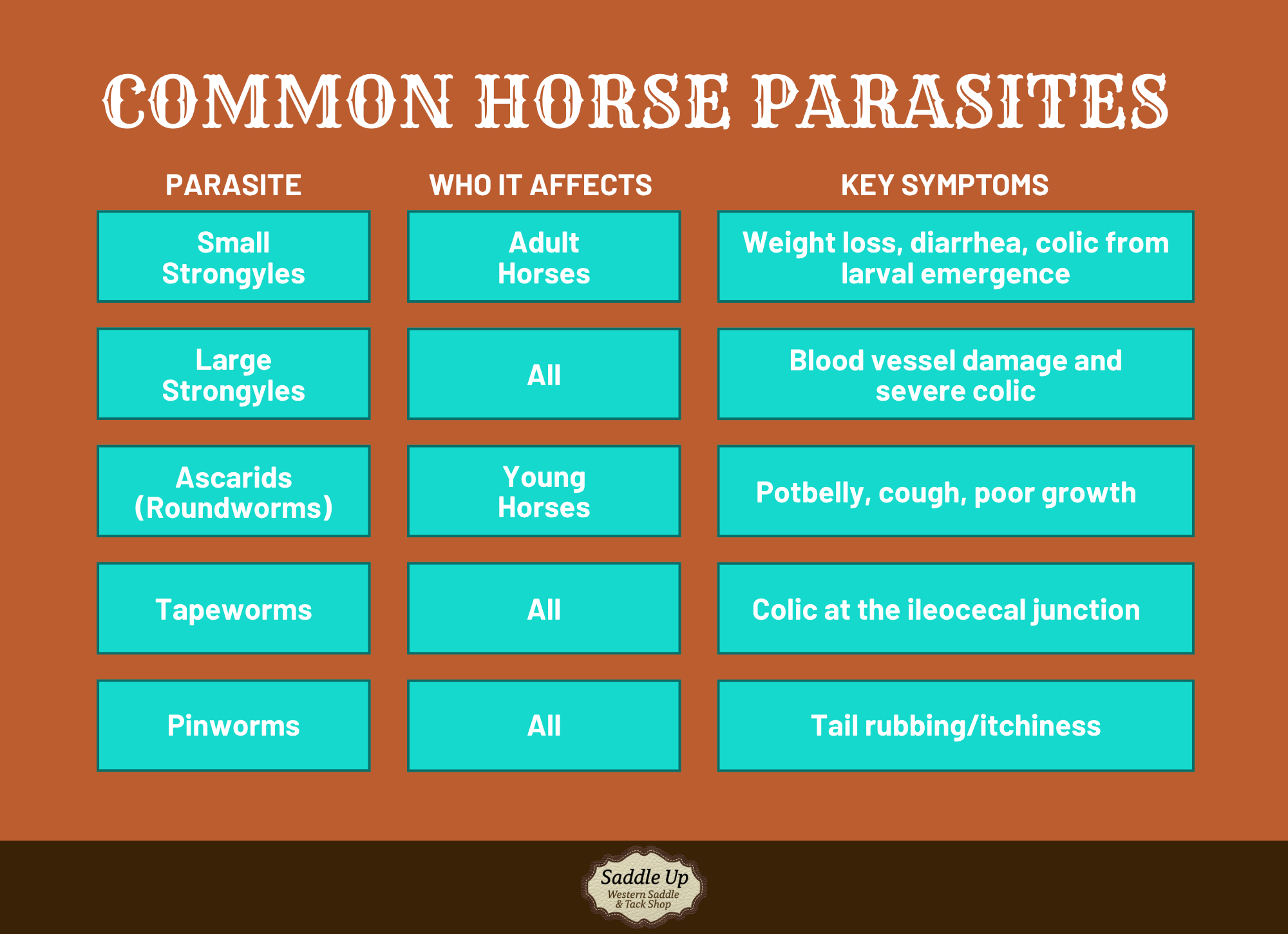
Internal parasites are a fact of life for horses, but knowing what you’re up against makes managing them a whole lot easier. Here are the most common worms you’ll see and how they affect your horse.
Small Strongyles (Cyathostomes)
These are the most common parasites in adult horses. Their larvae can hide in the intestinal wall for months at a time. When they emerge all at once, they can trigger weight loss, diarrhea, and even colic.
Large Strongyles (Bloodworms)
Less common than they used to be, but still serious. These parasites migrate through blood vessels and organs before settling in the large intestine, where they can interfere with blood flow and cause significant digestive issues.
Ascarids (Roundworms)
A major concern for young horses. They can cause potbellies, coughing, poor growth, and – if the load gets heavy enough – intestinal blockages.
Tapeworms (Anoplocephala perfoliata)
Tapeworms gather where the small intestine meets the large intestine. Their presence increases the risk of certain types of colic, especially in horses that graze heavily.
Stomach Worms
These can irritate the lining of the stomach and sometimes contribute to summer sores when larvae migrate to wounds.
Pinworms
Known for making horses rub their tails. They irritate the skin around the tail head, causing itching and hair loss.
Strongyloides westeri
More common in foals. They can be passed through the mare’s milk and may cause diarrhea in very young horses.
Spotting the Signs of a Worm Problem
Parasites can show up in a few different ways. Some horses hide the signs well, while others show changes quickly. Here are the most common things to watch for:
Changes in Body Condition
- Weight loss despite a good appetite
- Poor topline or ribs showing more than usual
- Potbelly appearance in young horses (common with ascarids)
Coat & Skin Changes
- Dull, rough coat
- Slow shedding in spring
- Tail rubbing or broken hairs around the dock (often from pinworms)
Digestive Red Flags
- Mild, recurring colic episodes
- Loose manure or diarrhea
- Reduced ability to maintain weight even with quality feed
Energy & Behavior Changes
- Lethargy or a horse that tires more quickly than normal
- Longer recovery time after exercise
- General “not quite right” attitude that doesn’t match your horse’s usual behavior
Foal-Specific Signs
- Diarrhea (can be linked to Strongyloides westeri)
- Poor growth
- Coughing or nasal discharge related to ascarid migration
Why We Don't Deworm Like We Used To
For years, the standard practice was rotational deworming – using a different product every couple of months and treating every horse on the property. At the time, the goal was to prevent resistance by keeping the worms guessing.
We now know that this approach did the opposite. Treating every horse on a set schedule has contributed to parasite resistance, especially in small strongyles. Many farms are now dealing with worms that no longer respond well to certain medications.
Today’s recommended approach is targeted deworming. It starts with fecal egg counts to see which horses are actually shedding significant numbers of parasite eggs. Research shows that roughly 20% of horses shed about 80% of the eggs, meaning a small group is responsible for most of the pasture contamination.
By treating only the horses that need it, and treating them with the right product, you reduce resistance, keep dewormers effective longer, and often save money over time. It’s a smarter, more sustainable way to manage parasites, and it helps protect the health of your entire herd.
Making Sense of Fecal Egg Counts
Fecal egg counts (FECs) are the foundation of modern parasite control. This simple test measures how many parasite eggs are present in one gram of your horse’s manure. The results help you determine whether your horse is a:
- Low shedder: under 200 eggs per gram
- Moderate shedder: 200-500 eggs per gram
- High shedder: over 500 eggs per gram
Knowing your horse’s shedding category helps you build a targeted deworming plan that’s effective and reduces resistance.
How to Collect a Good Sample
- Pick up a fresh manure pile as soon as the horse drops it
- Use a clean bag or container
- Label it with the horse’s name and date
- Keep the sample cool if you can’t deliver it immediately
- Get it to your vet or lab within 24 hours for accurate results
Most veterinarians can run these tests in-house, and many offer discounts for barns submitting multiple samples at once.
Building a Deworming Schedule That Makes Sense
A solid deworming program depends on your horse’s shedding status, age, and environment. Once you’ve run fecal egg counts, you can build a schedule that targets the horses who actually need treatment.
Adult Horses
Most adult horses only need to be dewormed two to four times per year, depending on their shedding category:
- Low shedders: often do well with twice-a-year treatments
- Moderate to high shedders: may need additional doses based on FEC results
Your veterinarian can help tailor a plan based on local parasite patterns and your horse’s history.
Young Horses
Foals, weanlings, and yearlings need more frequent attention. Their immune systems aren’t fully developed, and certain parasites, especially ascarids, hit them harder.
- First deworming at 2–3 months old (targeting ascarids)
- Continue treatments every 2–3 months through the yearling stage
- Use FEC results to guide product choice and timing
- By age two, most horses can transition to the adult schedule
Seasonal Timing
Timing matters just as much as frequency:
- Spring: deworm for strongyles as temperatures warm
- Fall: another strongyle-focused treatment
- Late fall/early winter: include praziquantel (or a double-dose pyrantel pamoate) to address tapeworms
- Warm climates: parasite activity lasts longer, so schedules may need adjusting
Matching your treatments to the seasons helps interrupt parasite life cycles and keeps your horse healthier year-round.
Special Cases: Not Every Horse is the Same
Older horses often need a little extra attention when it comes to worms. Their immune systems aren't what they used to be, so they might shed more eggs even with regular deworming. If your old timer has dental issues, keeping parasites under control becomes even more important for maintaining weight.
Pregnant mares need careful handling since some dewormers aren't safe during pregnancy. Plus, Strongyloides westeri can pass through the milk to foals, so you'll want to treat mares before foaling. Best to chat with your vet about what's safe to use and when.
If you're at a busy barn with horses coming and going, you're dealing with higher parasite exposure. Between new horses bringing in their own worm problems, shared pastures, and common water tanks, it all adds up. These situations might call for more frequent testing and being real strict about quarantine protocols for newcomers.
Picking the Right Dewormer for the Job
Not all dewormers treat the same parasites, so it’s important to match the product to what your horse actually has. Fecal egg counts and your vet’s guidance make this part much easier. Here’s a breakdown of the most commonly used options:
Ivermectin
Ivermectin remains one of the most reliable broad-spectrum dewormers. It’s effective against:
- Large strongyles
- Adult small strongyles
- Ascarids
- Stomach worms
It does not treat tapeworms or encysted small strongyle larvae. Even so, it’s a solid choice for most spring and fall treatments.
Praziquantel
Praziquantel is the most effective product for tapeworms and is often combined with ivermectin in “combo” pastes. Many horse owners use it during late fall or early winter.
Pyrantel Pamoate
A dependable option, especially where ivermectin resistance is a concern.
- Standard dose: treats strongyles and ascarids
- Double dose: effective against tapeworms
It’s also useful as a mid-summer treatment when fecal egg counts suggest a boost is needed.
Moxidectin
Moxidectin lasts longer in the system than ivermectin, often reducing egg shedding for up to 90 days.
- Effective against encysted small strongyle larvae
- Helpful for high shedders who need more sustained control
Because it’s stronger, moxidectin should not be used on young foals, minis, or compromised horses without veterinary guidance.
Quick Guide to Seasonal Deworming
- Spring: Ivermectin or moxidectin (based on FEC results)
- Summer: Pyrantel pamoate if needed
- Fall: Ivermectin + praziquantel for tapeworms
- Winter: Deworm based on individual FEC results and shedding status
This schedule will vary depending on climate and fecal egg count results, but it’s a good starting point.
Keeping Track and Making Adjustments
A good deworming program isn’t “set it and forget it.” Regular fecal egg counts help you confirm that your plan is working and show you which horses need closer attention.
Test Regularly
- Run fecal egg counts on every horse at least once a year
- Test high shedders more frequently to monitor how well treatments are working
- Keep an eye on younger horses – they can change shedding status as they mature
Keep Good Records
Track the basics for each horse, including:
- FEC results
- Deworming dates
- Products used
- Any changes in condition
This helps you spot patterns and adjust the program before problems build.
Watch for Resistance
After deworming, a follow-up fecal egg count reduction test should show at least a 90% drop in egg numbers. If the reduction is lower, you may be dealing with resistance. That’s the time to involve your veterinarian and reassess your plan.
Stay Flexible
Some horses may need adjustments based on:
- Recent illness
- Heavy training schedules
- Weight changes
- Feed changes
- Environmental stress
Staying observant and adaptable helps you keep your deworming program effective and your horses healthy year-round.
Keep Worms Away with Saddle Up Colorado
Keeping your horse healthy doesn’t have to be a guessing game. With smart testing, the right products, and a plan that fits your horse, parasite control becomes a whole lot simpler.
At Saddle Up Colorado, we stock dewormers horse owners actually use, ivermectin, moxidectin, sprays, and more, all from brands you know and trust.